What's The Difference Between "Not Up" and "Down" In Squash?
A short squash article to improve your squash
“Not up” specifically means the ball bounced twice, “down” should be used when the ball hits the tin or the floor after being hit. Read on to learn more.
Refereeing, which is also called marking, can be one of the most difficult aspects of competitive squash. Let me be clear, when I use the adjective “competitive”, I specifically mean in proper competitions and events. I have no doubt that two friends who play at the local courts are very competitive and really want to win, but it’s not part of an official event.
I will also take this opportunity to say that technically “referee” and the “marker” are two separate roles. The referee makes the decisions and the marker marks the points and calls the score. Of course, nowadays both roles are taken by one person, both professionally and in amateurs ranks – at least most of the time.
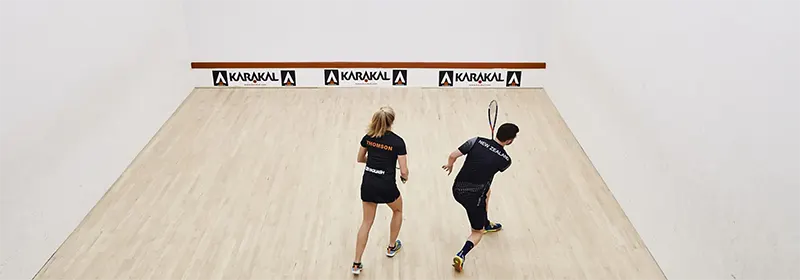
Not Up
So, as I said in the introduction, the call “not Up” is used when the ball has bounced twice, but also when the ball hits the racket strings or frame twice, and even something called a “carry”, which is when the ball is on the strings for too long. I’ve heard it called a scope too and that describes the movement of the racket.
Down
Down is called when the ball hits the floor before the front wall after being hit, or when it its the tin or finally when the wall hits the front wall and then hits the tin – that last one is very rare, but does happen.
Out
tOut is called when the ball either hits or goes above the out line – remember, unlike tennis, if the ball hits a line in squash, it’s out – or hits the front wall and then goes out.
Final Thoughts
If you do find yourself marking or refereeing a match and are not sure what happened, just be honest with the players and say you are not sure. In those cases, just play a let. Undoubtedly, it’s a little unfair on one player, but it’s hard to see everything and as long as you are fair and honest, that’s what is important.