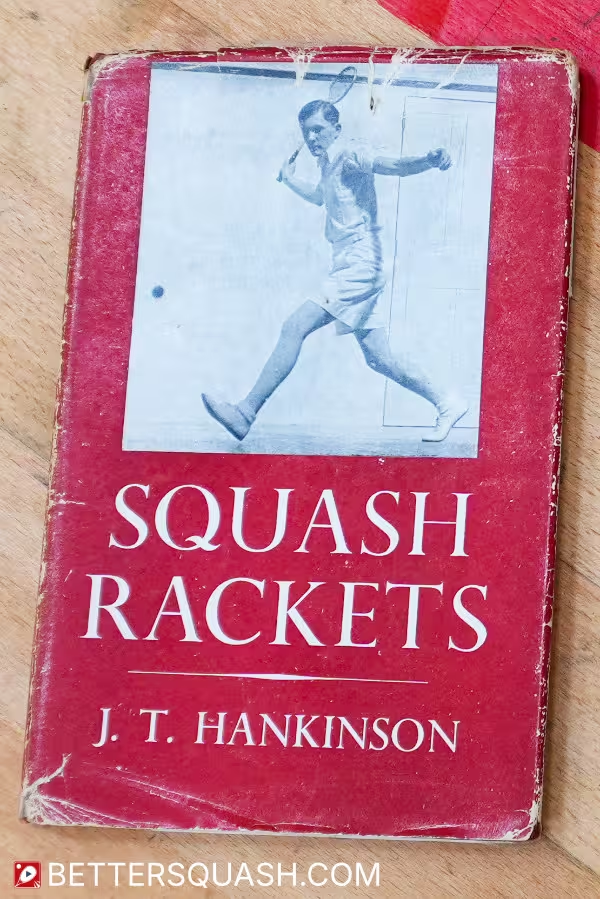
Squash Rackets J. T. Hankinson 1949
A short and direct book that has plenty of advice that is still relevant today.
Squash Rackets by J. T. Hankinson 1949 is a wonderful book and I thoroughly enjoyed reading it. This squash book contains some interesting presentation concepts. It’s quite short and focuses on what the author thinks are the most important points about playing squash well rather than trying to cover everything.
Dotted links go to the Squash Glossary.
- Author
- J. T. Hankinson
- First Published
- 1949
- My Copy
- 1949
- Publisher
- George Allen & Unwin Ltd
- Pages
- 48, plus plates
- Availability
- Softback second hand copies available for under 10 Euros. My hardback copy costs around 45 Euros. Prices correct as of October 2026.
Cool feature
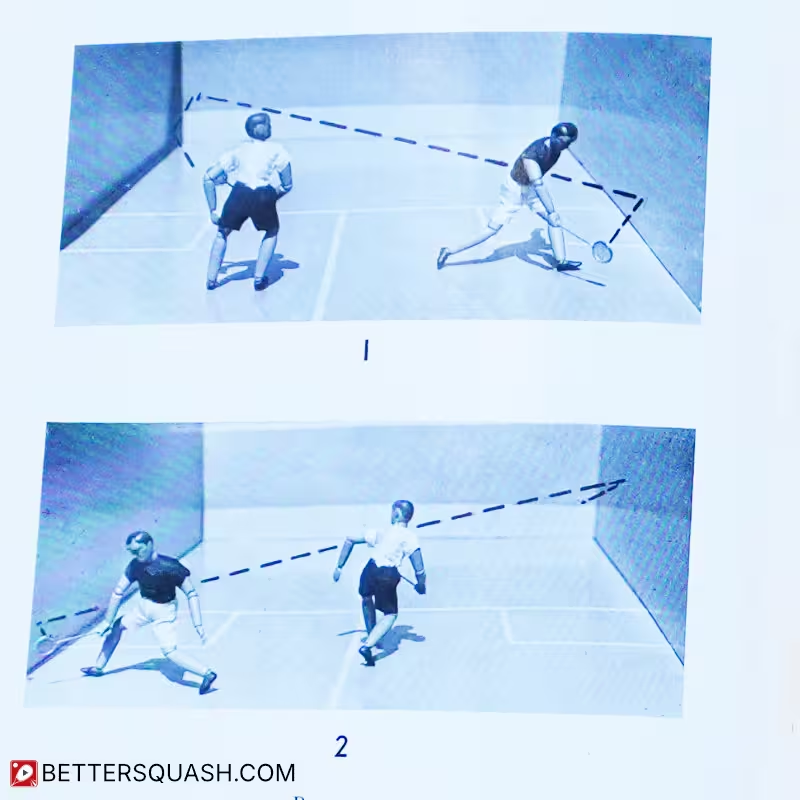
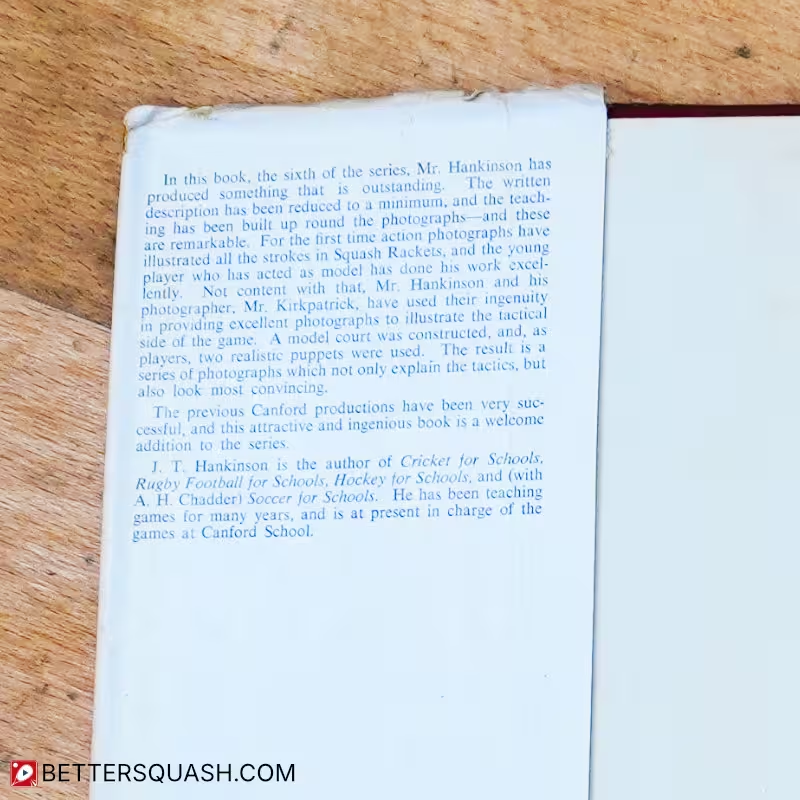
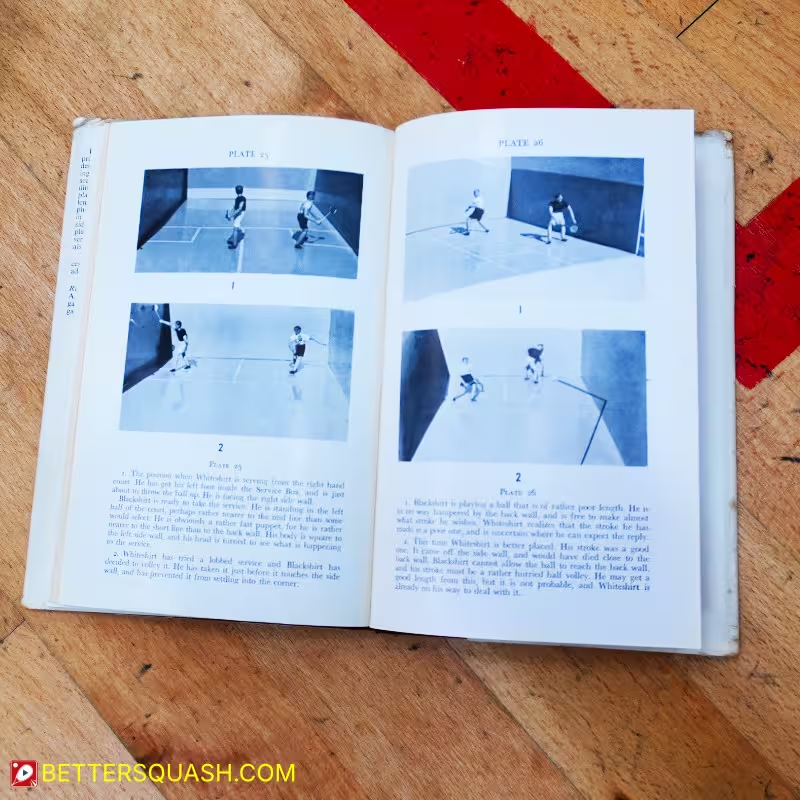
Photos of puppets on a model court to show shot selection and tactics. They must have spent quite a lot of time building and photographing these. It’s such a clever idea. How much fun would it be to have a stop-motion video of tactical explanation?
Review
I want to start by saying there is a lot in this book that is still applicable for today’s squash players.
This book was written by a school master and has that air of authority where he expects instant and complete compliance.
He emphasises squash is a game of contrasts: hard shots and soft shots, straight and “flanks”, deep and short, high and low, and finally moving very fast and standing still.
His approach must have been quite revolutionary at the time and I suspect he would have made a great coach in any era. His directness and focus on essentials are particularly valued in today’s video-centric world.
The use of some phrases was interesting to see too, for example flank.
All in all, a fun book to read and the puppets and models were a joy to encounter.
Features
- Uses photos of puppets on a model court to show shots
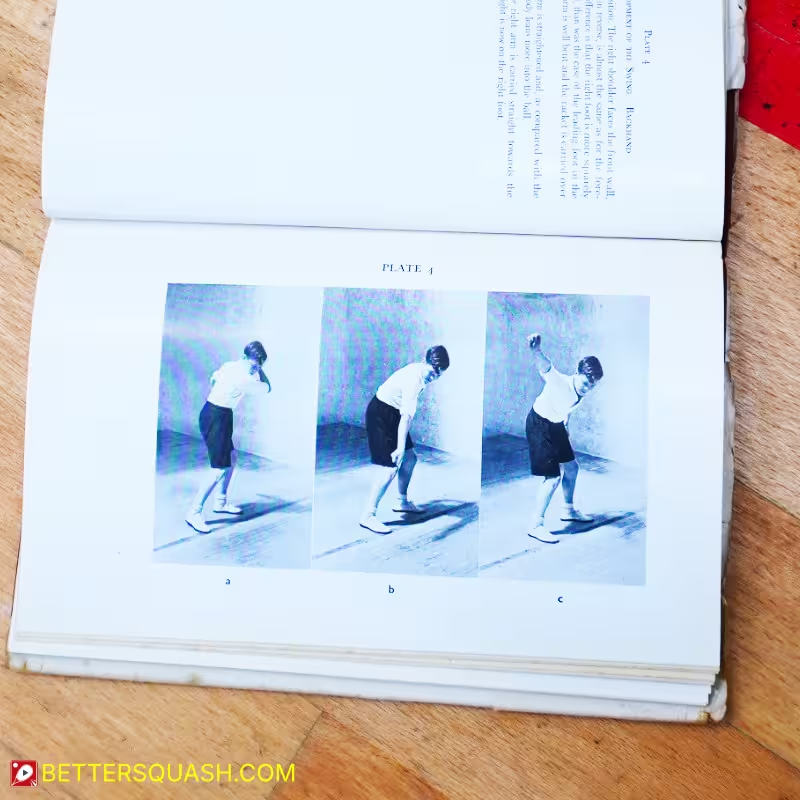
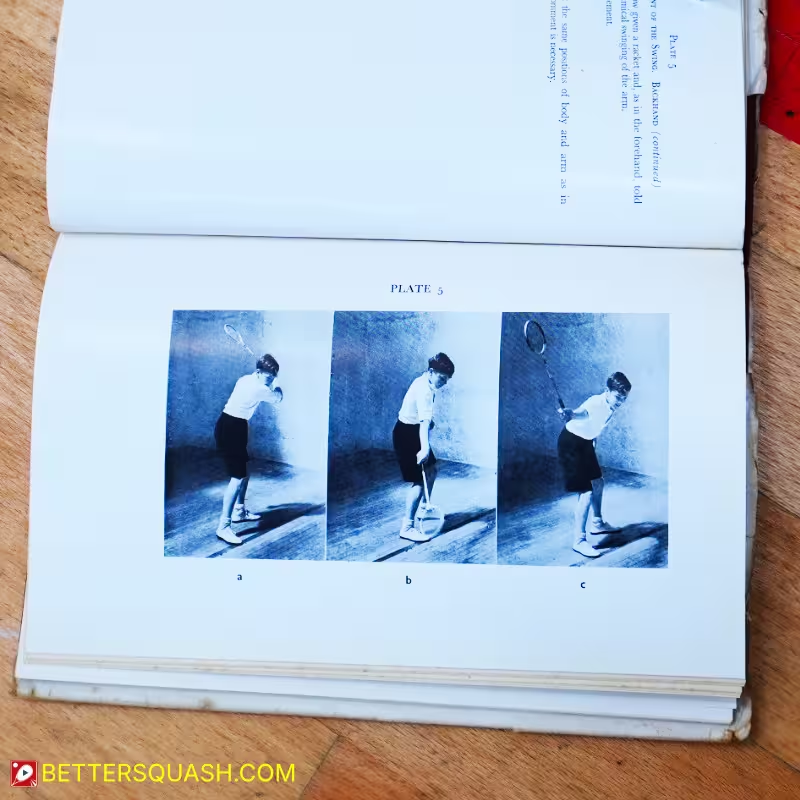
- Has photos of swings without the ball and racket
- Gave 12 boys rackets and asked them to hold them how feels natural.
- Contains nothing about equipment.
- Suggests that the half-volley is a very important and oft-played shot.
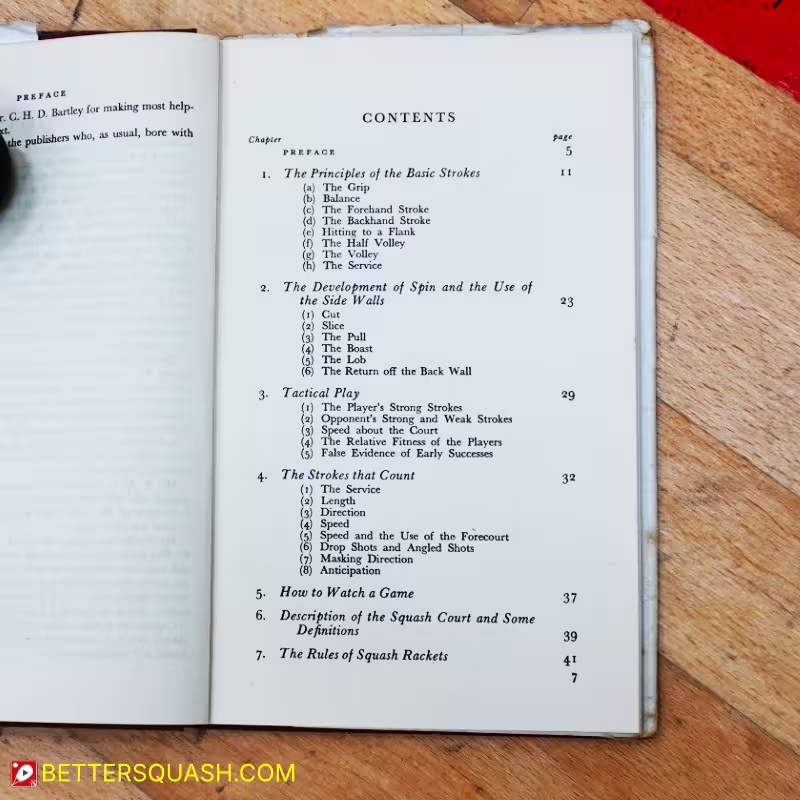
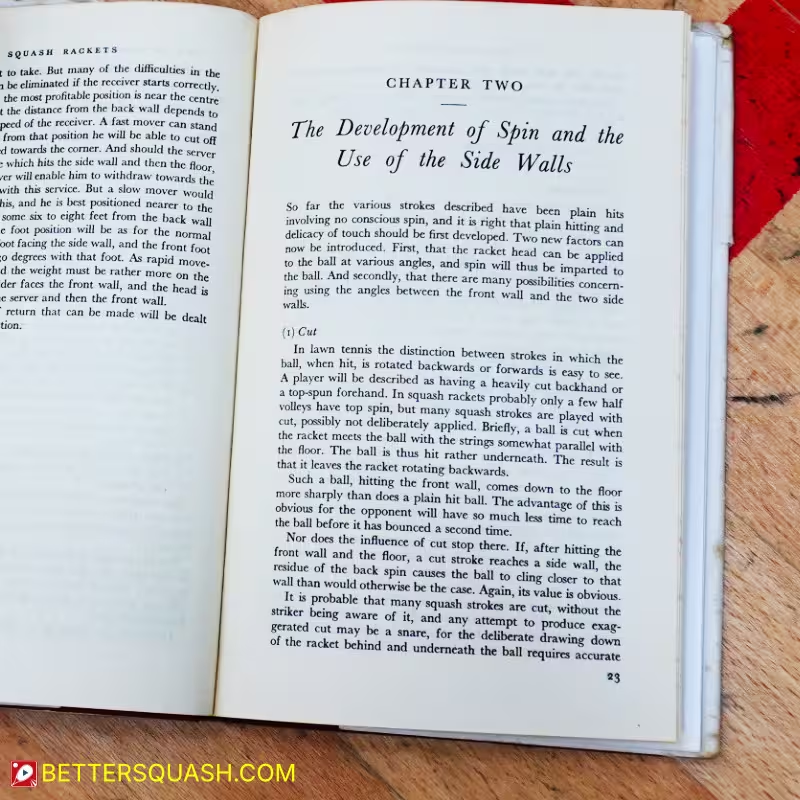
- Separates “cut” from “slice”: Chapter Two, The development of spin and the use of the side walls. (p. 25)
- The author chose to use teenage boys who were all novices as photo models.
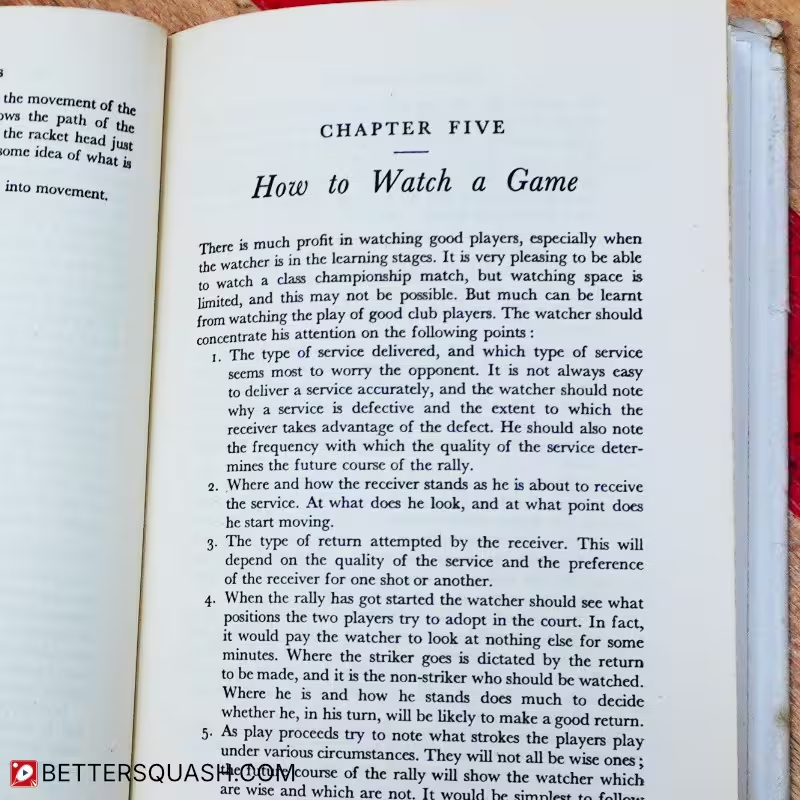
- Chapter Five: How to Watch a Game is something I don’t think I’ve seen in other squash books. (p. 37)
Quotes
“And yet, far too often, and especially among young players, the service is regarded merely as a method of getting the ball into play”
p. 19
“In squash rackets a good length ball is one which bounces for the second time just before reaching the back wall, or one which reaches the back wall first bounce and takes its second bounce just after hitting the back wall”
p. 33
“If your opponent dislikes speed, then he should be given it.”
p. 33
“But the balanced player is not so easily beaten. He will only start moving when he has decided where the ball is going.”
p. 35
With regard to watching the opponent he says
“I cannot attempt to explain this co-operation of the sub-conscious but, judging by the movements of good players, it must exist.”
p. 35
Curiosities
- Page 23: “…and any attempt to produce exaggerated cut may be a snare, for the …”. I’m guessing that snare might be a term for a mishit.
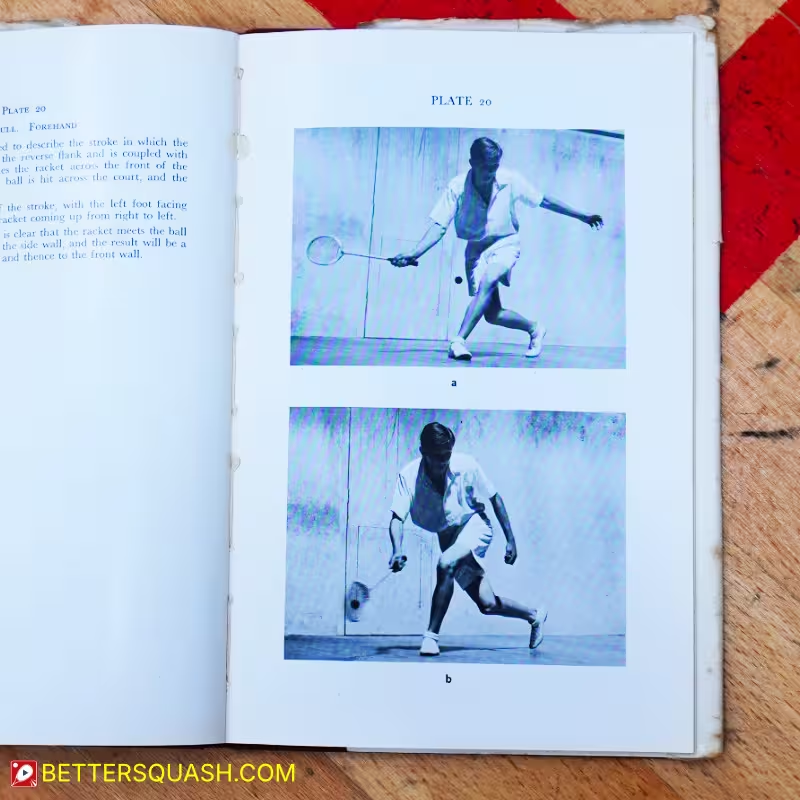
- Plate 20: The Pull and Reverse Flank. This is clearly what we nowadays call a reverse angle.
- Page 19: Talking about playing volleys “The actual stroke is in the nature of a stemming”.
- Page 40: A double fault is when the serve hits the tin or beyond the outlines directly.
- Various Pages: The “ace” is used to define winning a rally or winning a rally with a winner as opposed to an error from one of the players but only if the player served.
- Page 42: If a serve is made from the wrong box and the returner returns it, the rally continues as if it were correct.
- Page 43: A fault may be accepted by the returner if they want to.
- Page 45: The points made about (17) Fair View are interesting, especially the “and in accordance with what would probably have happened had there been no interference.”
- Page 48: The point about handicapping and giving players “hands”, which I take to mean extra serves, but honestly I’m not sure.
- Tactical Plates: 25: It’s interesting how close blackshirt is to the half-court line when receiving serve. Plate 19 shows a live version of the same position and page 21 describes this position.
- Tactical Plates: On each page, the author sets up two situations, sometimes the second follows the first, other times not. The author tells a story through each one though and some are quite funny.
- Plate 31, image 2: Seems to show a double boast!
- Plate 32: Shows that they called any shot that hit the side wall in front of the short line “an angle”.
- Various Pages: Show that “cross court” was two words, unlike today which is nearly always one word.
- Page 15: The author suggests that simply by turning the leading foot away from or towards the sidewall, the ball will go in that direction. No discussion about the point of contact in relation to a fixed point on the body, say the knee, just the toe points the way.
- Various Pages: The use of the word “flank” to mean cross court, at least I think it means that.
- Page 17 and more: The use of the word “tell-tale” to mean tin.
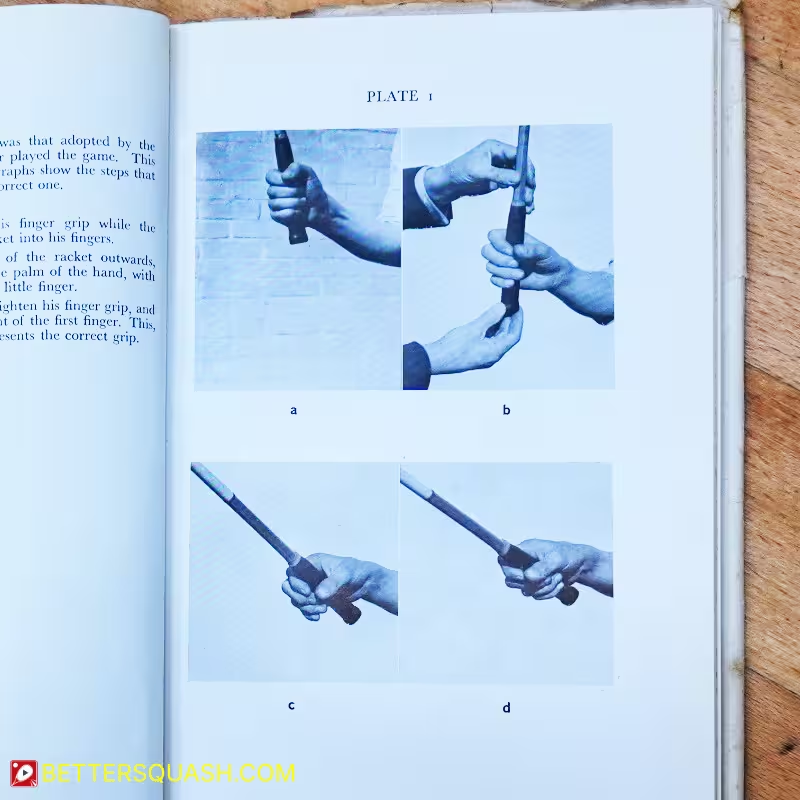
- Plate 1: The photos of the grip show very thin handles on the rackets.
Watch the Short
Gallery
Cover and page images are shown for review and commentary. Copyright remains with the authors and publishers.